
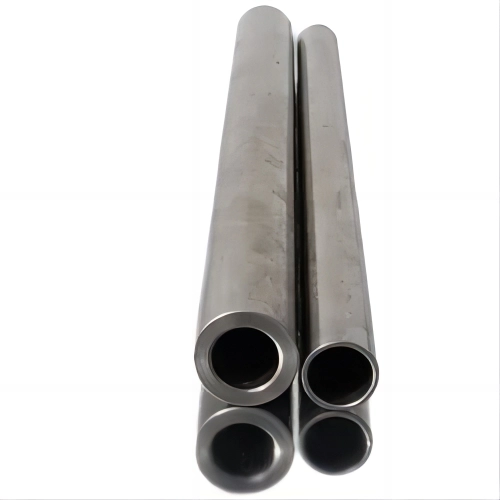
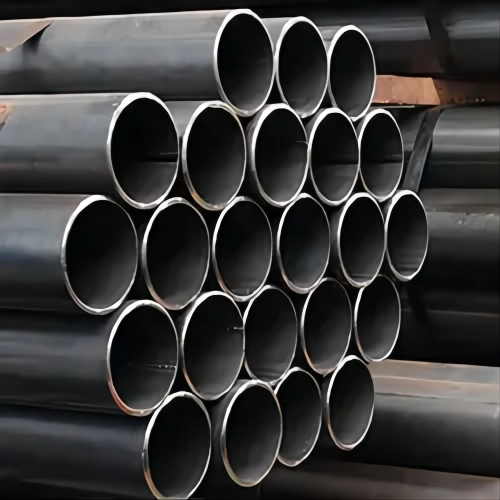
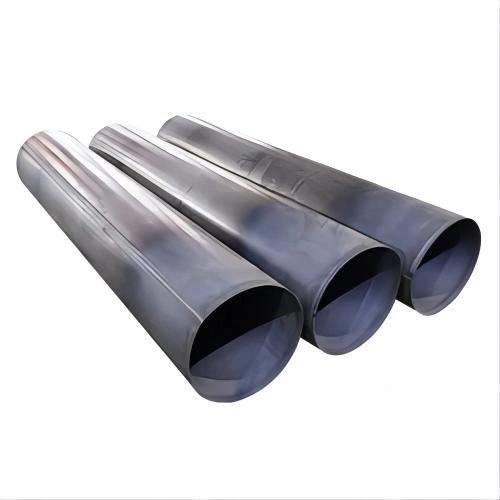
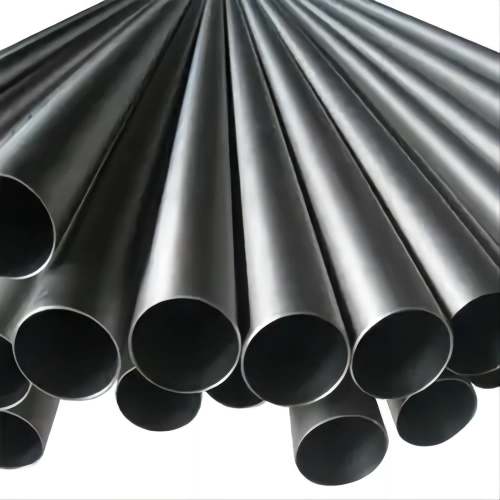
GB 20# Steel Pipe is a carbon structural steel with low price, good cutting performance, high hardness after quenching, and good toughness and wear resistance after quenching and tempering.
45# Carbon steel Pipe application parameters:
| Product Name | 45# – JIS:S45C/S48C DIN C45 Carbon Steel Pipe |
| Length | max 12000mm, Cutting Length: available according to customer’s requirement. |
| Outer Diameter | 4mm-500mm
if you need, please contact us for more. |
| Wall Thickness | 0.5mm-50mm |
| Standard | AISI,ASTM,DIN,JIS,GB,EN,BS,AFNOR,NF,UNI, UNE,etc. ;
Test Reports of Material & SGS Inspection Available |
| Technique | Hot rolled (HR) Cold rolled(CR) |
| Thickness Tolerance | ±1% |
| Main Grades: | 10# 20# 35# 45# 50# 60# Q345B Q345C Q345D Q345E,Q235B Q235R Q355B ST12 ST37 ST52 etc. |
| MOQ | 1ton. Sample order acceptable. |
| Lead Time | Within 5-20days after receiving deposit.
If in large tons, please contact us for confirmation. |
| Export packing | Waterproof paper protected, steel strip packed stably, and fixed well.
Standard Export Seaworthy Package. Suit for all kinds of transportation means; or as required |
45# Carbon Steel Chemical Composition:
| Element | Composition (%) |
| Carbon (C) | 0.42-0.50 |
| Silicon (Si) | 0.17-0.37 |
| Manganese (Mn) | 0.50-0.80 |
| Phosphorus (P) | ≤0.035 |
| Sulfur (S) | ≤0.035 |
| Chromium (Cr) | ≤0.25 |
| Nickel (Ni) | ≤0.30 |
| Copper (Cu) | ≤0.25 |
Product Description
Carbon steel pipe is a type of pipe that consists mainly of iron with small amounts of carbon added to it. It is one of the most commonly used types of pipes because it has several benefits over other materials such as stainless steel or PVC. Carbon steel pipes are strong, durable, and corrosion-resistant. They are also very cost-effective since they are much cheaper than other types of pipes. Plus, they are easy to install since they do not require any special tools or skills.
Application
45# steel is a commonly used medium-carbon quenched and tempered steel, with good comprehensive mechanical properties, low hardenability, and cracks are prone to occur during water quenching. Small parts should be quenched and tempered, and large parts should be normalized. It is mainly used to manufacture high-strength moving parts, such as turbine impellers and compressor pistons. Shafts, gears, racks, worms, etc.
Quick info